
Stone wool engineered for tomorrow

ROCKWOOL Stone Wool Insulation — Thermal, Acoustic & Fire Solutions

Specification teams choose ROCKWOOL when cavity and continuous insulation must deliver published thermal conductivity, Euroclass A1 non-combustible fire resistance rating pathways, and NRC-class acoustic absorption without trading moisture durability for schedule speed.

Performance architecture

Why Envelope Teams Specify ROCKWOOL Stone Wool

Each capability below maps to a decision gate architects, fire consultants, and procurement managers close before insulation packages freeze on bid day.

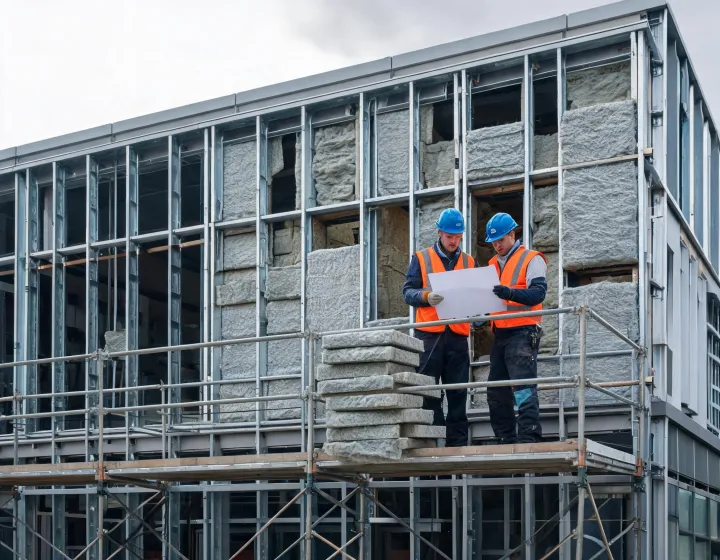
Basalt stone wool fiber close-up under laboratory lighting

Non-combustible to 1000°C

ROCKWOOL stone wool is tested to ASTM E136 and classified Euroclass A1 under EN 13501-1, giving facade and shaft assemblies a non-combustible fiber matrix that does not feed fire load. Specifiers use this pathway when jurisdictions tighten combustible cladding rules and insurers demand listed fire resistance rating packages.
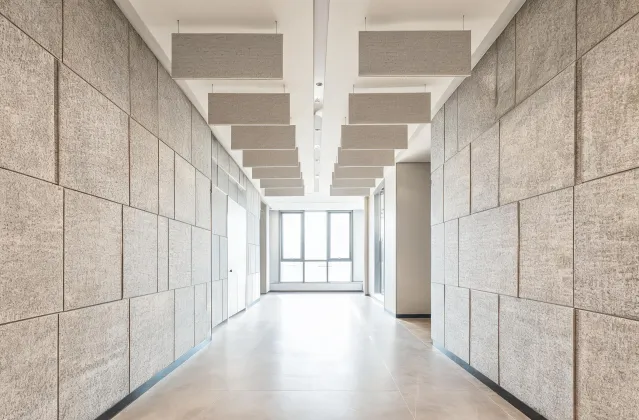
Acoustic stone wool panels in a commercial corridor

Acoustic absorption without cavity redesign

NRC values from 0.95 to 1.05 across designated boards and batts help teams hit STC rating targets in party walls, mechanical rooms, and open offices. Fiber geometry attenuates mid-frequency noise while thermal bridging at studs stays controlled by continuous insulation layers.

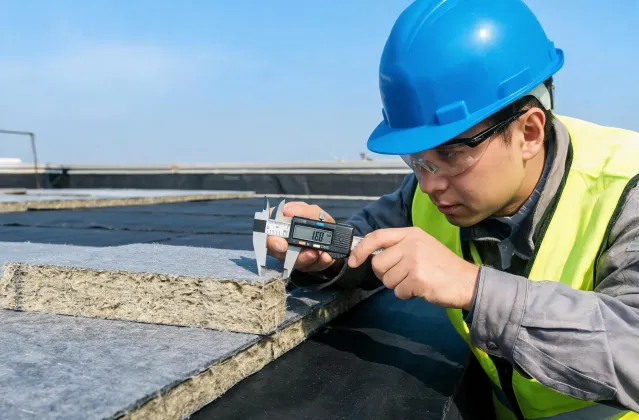
Thermal density measurement of insulation board thickness

Thermal conductivity from 0.033 W/(m·K)

Published lambda values from 0.033 to 0.040 W/(m·K) let energy modelers lock R-value packages before HVAC tonnage is over-specified. Dimensional stability under cyclic temperatures keeps board joints from opening and creating unexpected thermal bridging paths.

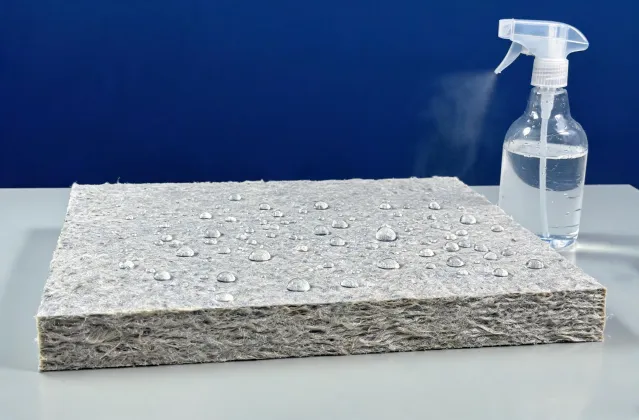
Water-repellent stone wool board after spray test

Moisture-aware fiber with low water absorption

Water-repellent treatments retain less than 1% moisture by volume under ASTM C1104 protocols on designated products. Moisture vapor transmission remains vapor-open enough for drying potential in rainscreen and cavity walls—addressing the natural-versus-engineered debate with data instead of slogans.

Comparative engineering data

Batt Cavity Fill vs Rigid Board Continuous Insulation

Side-by-side values for specification writers comparing ROCKWOOL batts against stone wool boards when thermal conductivity, fire resistance rating, and compressive strength govern the wall or roof detail.

Parameter ROCKWOOL Batt Insulation ROCKWOOL Board / Panel
Typical R-value per inch R-3.8 to R-4.3 R-4.0 to R-4.3
Thermal conductivity (λ) 0.035–0.040 W/(m·K) 0.033–0.037 W/(m·K)
Fire resistance pathway Euroclass A1 / ASTM E136 non-combustible Euroclass A1 with rainscreen & shaft assemblies
NRC / acoustic role Cavity packs for STC 50–55 assemblies NRC 0.95–1.05 on designated boards
Compressive strength Friction-fit in stud cavities Suitable for rainscreen planes & roof overlays
Water absorption rate <1% by volume on treated batts <1% by volume; drains in ventilated cavities
Primary construction use Wood & steel stud cavities Continuous insulation, roofs, industrial ducts
Prefabrication fit Panelized wall packs with traditional framing Factory-cut boards for modular envelope kits

Documentation limits: values are typical published ranges for designated constructions. Project submittals must cite the active SKU sheet (EN 13162 / local listing). Boards under sustained point loads, batts over-compressed in thin cavities, and assemblies without a drained rainscreen plane fall outside these compare rows—request engineer review before freezing the insulation package.

Construction segments

Insulation Details Mapped to Real Building Types

From mid-rise commercial shells to process plants, ROCKWOOL stone wool packages align thermal, acoustic, and fire criteria with the roles who sign off on submittals.

Commercial mid-rise

Rainscreen boards and cavity batts that hold R-value while fire consultants clear non-combustible cladding pathways.

Industrial process

High-temperature duct and vessel wraps where fire resistance rating and dimensional stability protect uptime.

Data & logistics halls

Acoustic boards that cut mechanical noise without thickening walls beyond the structural grid.

Education & healthcare

Low VOC emissions packages with STC-aware partitions for occupied wings and classrooms.

Multifamily envelopes

Party-wall and floor/ceiling stacks balancing fire separation with acoustic comfort for stacked living.

Infrastructure tunnels

Non-combustible linings for transit and utility corridors where smoke toxicity and fire load matter.

1937
Founded in stone wool science
38
Manufacturing sites worldwide
40+
Countries with field support
A1
Euroclass non-combustible rating
Operating scale

Numbers Specifiers Ask Before They Shortlist

10000 Employees across plants & technical desks
0.033 Published low-end λ W/(m·K) on designated boards
1.05 Peak NRC on acoustic stone wool panels
2030 Carbon-neutral manufacturing roadmap year

Lock Insulation Specs Before Bid Packages Freeze

Share your R-value target, fire resistance rating pathway, and acoustic goals. Our desk returns published lambda values, EN 13162 references, and mill window guidance—not a generic brochure dump.

  • Euroclass A1 / ASTM E136 documentation for plan review
  • Thermal bridging notes for rainscreen and stud cavities
  • NRC and STC rating pathway commentary for occupied spaces
  • Moisture vapor transmission guidance for drying walls

Request a Technical Package