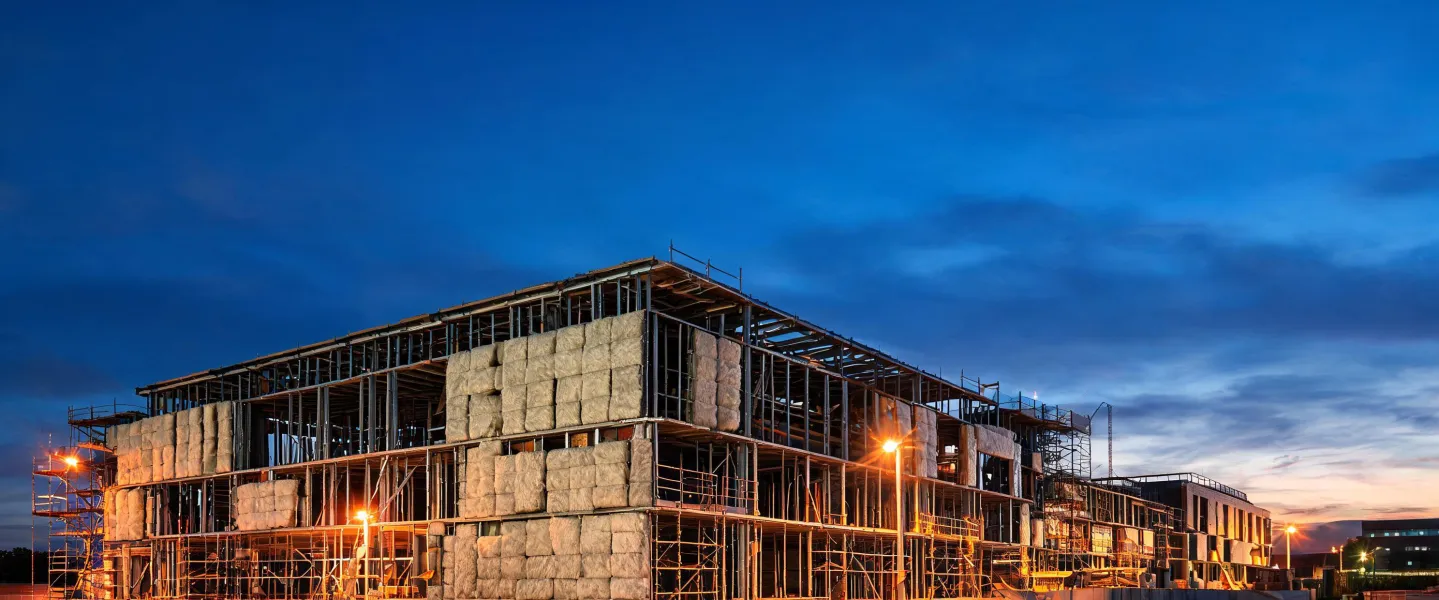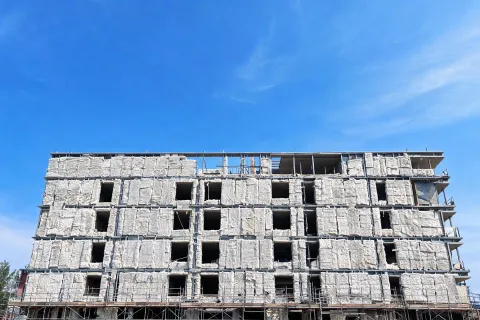
Commercial mid-rise
Continuous stone wool boards that control thermal bridging while clearing non-combustible cladding pathways.
Horizontal industry stories
Each vertical below pairs real construction constraints with thermal conductivity, fire resistance rating, and acoustic evidence so insulation shortlists survive both design critique and plan review.
Continuous stone wool boards that control thermal bridging while clearing non-combustible cladding pathways.
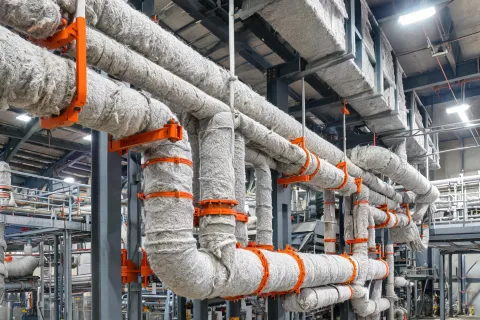
High-temperature wraps where dimensional stability and fire resistance rating protect uptime and personnel.

NRC-class boards that cut mechanical noise without thickening walls beyond the structural grid.
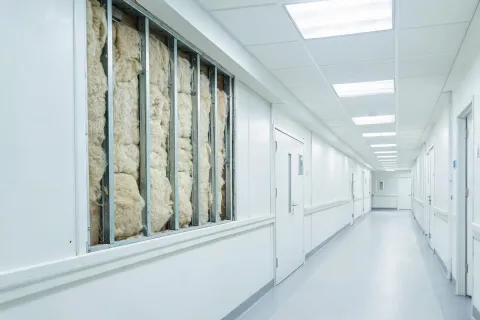
Low VOC emissions packages with STC-aware partitions for occupied clinical wings.
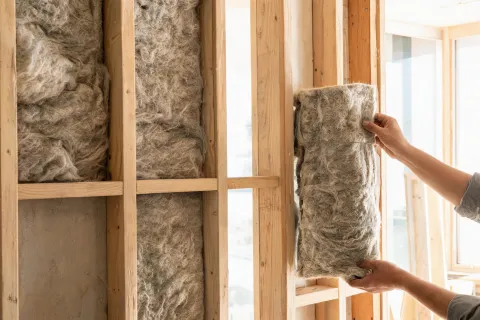
Party-wall and floor/ceiling stacks balancing fire separation with acoustic comfort.

Non-combustible linings for transit and utility corridors where smoke toxicity and fire load matter.
Each card follows Background · Process · Result so specification writers can verify constraints before shortlisting. Metrics are package-level narratives for desk conversations—not independent third-party case studies.
Background: A 12-story coastal facade (2024 bid package) still carried combustible foam continuous insulation under a planned rainscreen refresh.
Process: Specifiers swapped to continuous stone wool boards, attached Euroclass A1 / ASTM E136 notes, and ran thermal-bridging psi checks before cladding mock-ups.
Result: Fire consultant clearance landed before mock-up day; ASTM C1104 water-absorption notes supported drying potential after wind-driven rain in the ventilated cavity. Limit: board compressive class must match cladding clip loads—do not substitute batt grades.
Background: A 2023 shutdown window left only 9 days to re-wrap high-temperature ducts while wash-down hygiene rules stayed in force.
Process: Factory-cut board kits replaced traditional on-site cut-and-fit; surface-temperature and dimensional-stability checkpoints were written into the commissioning sheet.
Result: Personnel touch limits cleared and fire resistance rating pathway stayed intact. Limit: prefab kits need frozen duct isometrics—field re-routes still require traditional cut packs.
Background: A 2025 stacked-living project needed party-wall STC pathways without delaying drywall after import freight slipped.
Process: Domestic mill allocation for batts/boards, with recycled-content percentage notes for the owner LEED worksheet.
Result: Acoustic consultant review accepted the stack; schedule risk from import delay was removed. Limit: green-premium claims must be recovered in the energy model—EPD figures alone do not justify cost uplift.
Dispute — natural mineral aesthetics vs engineered fiber consistency: Owners wanting geological authenticity at feature thresholds should keep stone cladding; teams needing reversible thermal packages should evaluate lambda, Euroclass A1 fire behavior, and selective board replacement first. ROCKWOOL does not claim stone wool replaces architectural stone—only that engineered fiber consistency is the right path when fire resistance rating and R-value packages govern the envelope.
Application limits: Stone wool is not a waterproofing membrane; keep rainscreen drainage planes intact. Do not compress boards beyond published limits (lambda and fire pathway both degrade). High-pH wash-downs and direct soil burial need SKU-specific notes—request the active TDS before freezing Division 07 language.
Share climate zone, occupancy, and fire resistance rating targets. We return an industry-specific insulation shortlist with published performance notes.
Explore Performance Specs